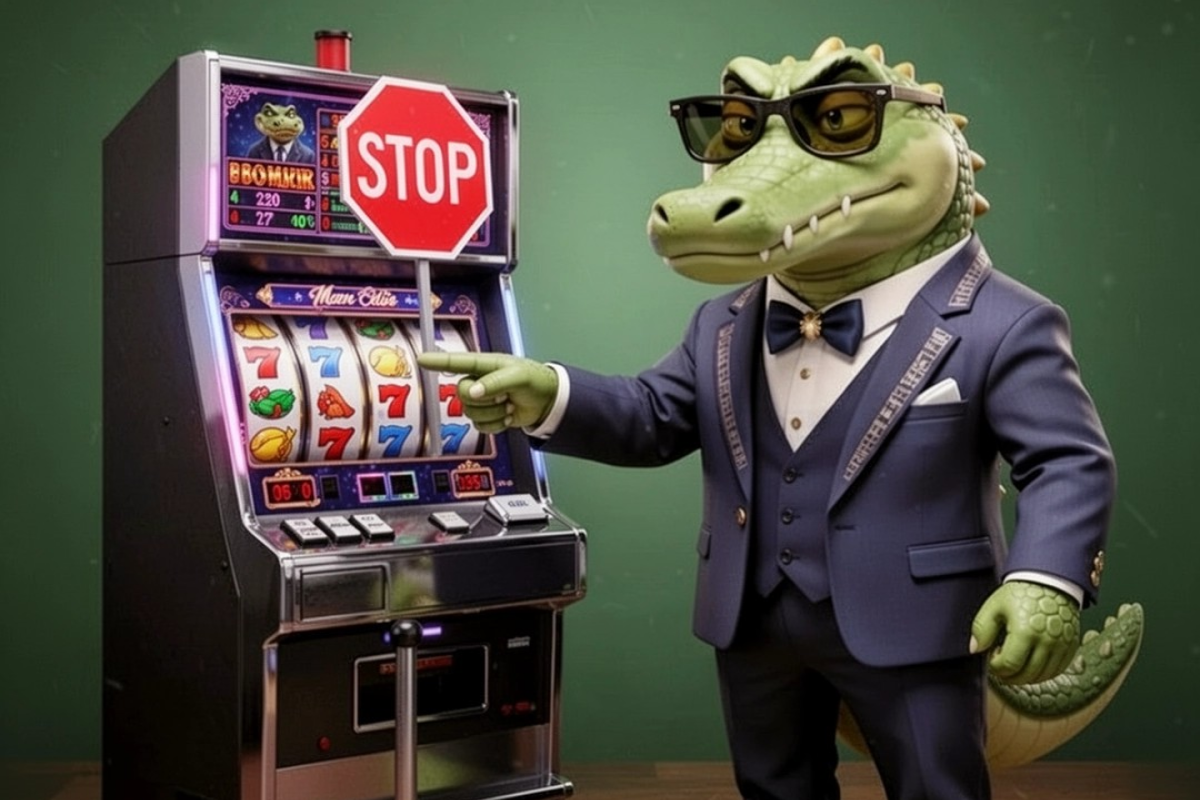
Stop-Loss Strategy for Slot Machines:
Alright, listen up. Samir here. I’ve seen more money disappear into slot machines than a magician makes cards vanish at a kids’ birthday party. And not just from the usual suspects—the drunks, the desperate, the ones who think they’ve ‘figured out’ when a machine is “due to hit.” I’m talking about seemingly smart people, the ones with the expensive watches and the quiet confidence, who suddenly go pale, their eyes glaze over, and they keep hitting that SPIN button long after their luck, and their bankroll, has evaporated. I’ve seen grown adults cry over a cold machine, not because they lost the money, but because they lost control. It’s a primal thing, that urge to chase. That’s why we’re talking about a stop-loss strategy. It’s not just for the stock market; it’s a survival tactic. It’s the invisible floor manager you need standing over your shoulder, ready to tap you out before you do something truly stupid.
I’ve walked the floor at 2 AM, watching a woman who started with a cool five hundred now down to her last twenty, sweat beading on her forehead as she increases her bet to max, convinced the bonus round is coming. The machine’s just cycling through its RNG, indifferent to her desperation. The other players are either ignoring her or secretly hoping she’ll leave so they can claim “her” machine. That’s when you wish someone, anyone, had told her to set a limit. To walk away. Because the machine always wins when you stay too long. Always.
What is a Stop-Loss Order?
Think of a stop-loss order as your personal, invisible bouncer. It’s a pre-set instruction to automatically exit a position once it hits a certain loss threshold. In the slots world, it’s the mental or actual line in the sand you draw that says, “If I lose X amount, I’m done. I’m cashing out. I’m going home.” It’s damage control, pure and simple. It’s the adult in the room when your emotions are trying to run the show.
Key Takeaways
- A stop-loss strategy is a predetermined exit point to limit potential losses.
- It acts as an emotional circuit breaker, preventing you from chasing losses.
- It’s applicable beyond finance, especially in slots gambling, to protect your bankroll.
Understanding Stop-Loss Orders
On the floor, I’d see players with a nice stack of twenties ready to feed into a machine, feeling invincible. Then a few dead spins, a couple of near-misses that didn’t pay, and suddenly that stack is looking… thin. The stop-loss is understanding that before you even sit down at a machine. It’s knowing your maximum acceptable loss for that session, or that day, or that weekend. It’s a discipline that most players only learn after they’ve had their wallets cleaned out. It’s about preserving your capital, not just winning more. It’s about living to play another day.
How Stop-Loss Orders Work
In the financial markets, you tell your broker, “Sell this stock if it drops to $50.” At the slots, you tell yourself, “If my initial $200 is down to $80, I’m done.” The mechanism is different, but the intent is identical: prevent a small loss from becoming a catastrophic one. It removes the decision-making from the heat of the moment, which, believe me, is when most people make their worst decisions.
Takeaway: A stop-loss is your pre-planned escape route from a bad situation.
Types of Stop-Loss Orders
While the slots floor doesn’t have ‘order types’ in the financial sense, the mindset behind them is crucial. Understanding these variations helps you think about how you manage your own risk at the machine.
Standard Stop-Loss Order
This is your basic, ‘if it hits X, I’m out’ command. At the slot machine, it’s deciding, ‘I’m playing with $100 tonight. If it drops to $40, I hit cash-out and walk.’ No excuses, no ‘just ten more spins.’ It’s a hard line.
Trailing Stop Order
This is where it gets interesting, even for a floor manager. A trailing stop moves with you. If you’re up, your ‘stop’ moves up too, protecting your gains. Imagine you start with $100. You hit a nice bonus and you’re up to $200. A trailing stop might say, ‘If I drop 20% from my highest point, I’m out.’ So, if you hit $200 and then drop to $160, you leave with a $60 profit. It’s about locking in wins, not just limiting losses. I saw a guy once, playing a Buffalo slot, hitting bonus after bonus. He was up probably $2,000 from a $200 start. Then he got greedy, kept max-betting, and within 30 minutes, he’d given $1,200 of it back. A trailing stop would have saved him a nice chunk of change.
Stop-Limit Order
This one’s a bit more nuanced. In trading, it triggers a limit order once your stop price is hit. In slots, it’s like saying, ‘If I hit my $80 loss limit, I’m not just walking away, I’m also limiting my next action to something safer, like playing penny slots at minimum bet for 10 minutes before I leave, just to cool down.’ It adds a layer of control to your exit strategy.
Buy-Stop Order
This is for short positions in trading, but the principle of ‘stopping a bad situation’ is the same. For a slots player, it’s less relevant, but the concept of recognizing when a machine is eating your money and you need to stop the bleeding by moving to a different game or, more commonly, just stopping entirely, applies.
Bracket Orders
This is the ultimate risk management package. It sets both a stop-loss and a take-profit order. So, you’re saying, ‘If I lose $60, I’m out. But if I win $100, I’m also out.’ It defines your entire session. I’ve seen plenty of players hit a decent bonus, then give it all back chasing an even bigger jackpot. A bracket order would have saved them the headache, and the money.
Takeaway: Different stop-loss approaches offer varying levels of protection and profit-taking flexibility.
Stop-Loss vs. Stop-Limit Orders
This is where a lot of newbies get tripped up in the real market, and where the analogy to the slots floor helps clarify things. It’s about certainty versus control.
Key Differences
A standard stop-loss order, when triggered, becomes a market order. It executes at the next available price. On the slots floor, when your mental stop-loss hits, you’re cashing out, no matter what the next spin might bring. You just want out.
A stop-limit order, however, triggers a limit order. This means it will only execute if the price is at or better than your specified limit. So, if you say, ‘I’m out if I hit $80, but I’ll only cash out if I can get at least $85 back somehow,’ you might not leave if you crash past $80 too quickly. On the slots floor, this is like saying, ‘I’ll leave if I’m down to $80, but only if there’s a free parking validation at the exit. Otherwise, I’ll play a few more spins.’ You’re trying to control the exit conditions, but you risk not getting out at all.
When to Use Each Order Type
Use a standard stop-loss when certainty of exit is your priority. You just want out, no matter what. The machine going cold? Doesn’t matter. Just get me out. This is for the player who says, ‘I’m down to $80, I’m done. I don’t care if the next spin triggers a bonus, I’m gone.’ It prioritizes risk mitigation above all else.
Use a stop-limit order when you want more control over your exit conditions, but understand you might not execute the exit if things move too fast. This is for the player who’s down to $80, but thinks, ‘If I can get back to $90, I’ll walk. Otherwise, I’ll ride it out a little longer.’ It’s a calculated risk, but a risk of not exiting nonetheless.
Navigating Stop-Limit Orders for Price Control
The danger here is getting ‘gapped.’ In the market, a stock can open significantly lower than its previous close, bypassing your limit price entirely. On the slots floor, it’s like setting a stop-limit to leave when you’re down to $80, but then you hit max bet and lose $30 in one spin, and you’re suddenly down to $50. Your ‘limit’ to exit at $80 was blown past. It’s a tough lesson, and one I’ve seen play out in real-time, often with a lot of cursing at the machine.
Takeaway: Choose between guaranteed exit (stop-loss) and condition control (stop-limit) based on your risk tolerance and machine volatility.
Advantages of Stop-Loss Orders
Believe me, if more slots players implemented a stop-loss strategy, my job would have been a lot less dramatic. It’s not about being a coward; it’s about being smart.
Protecting Investments from Downside Risk
This is the big one. It’s the whole point. A stop-loss prevents a bad session from becoming a terrible week, or a terrible year. It caps your exposure. It’s the fire extinguisher you hope you never use, but are damn glad to have when your bankroll starts smoking.
Managing Risk in Gambling
It’s fundamental risk management. You define your maximum acceptable loss before you even insert your first bill. This allows you to budget correctly and sleep at night, instead of staring at the ceiling, replaying every near-miss and bonus round that didn’t pay. It’s what separates the disciplined from the delusional.
Why Use Stop-Loss Orders?
Because emotions are a killer. Especially when money is involved and spinning reels are hypnotizing you. When you’re down, the urge to win it back, to ‘get even,’ is incredibly powerful. A stop-loss removes that emotional decision. It’s a pre-commitment to protect yourself from your own worst impulses. I’ve seen players punch machines, yell at floor staff, even try to fight other patrons in disputes over “their” machine, all because they couldn’t walk away. A stop-loss would have spared them the humiliation.
Helping to Avoid Catastrophic Losses
In financial markets, a stop-loss can save you from catastrophic losses during a market downturn. On the slots floor, it saves you from your own personal ‘crash’—that spiral where every spin is a loss, and every dollar goes to the machine.
Takeaway: A stop-loss is your best defense against emotional decisions and disproportionate losses.
Risks and Disadvantages of Stop-Loss Orders
Nothing’s perfect, especially when it comes to money. Even a good stop-loss strategy has its downsides, and understanding them is part of being savvy.
Stop-Loss Order Risks
The main risk is getting ‘stopped out’ prematurely. You set your stop too tight, and a normal losing streak, or a bit of typical slot variance, hits your stop, and you’re out. Then, the machine (or a different machine) starts paying, and you missed the wins. It’s frustrating, like leaving a machine right before someone sits down and hits a jackpot on the first spin. Happens all the time.
Cons of Using Stop-Loss Orders
- Whipsaws: Getting stopped out by temporary bad luck, then watching another player hit bonuses on the same machine.
- Rapid Losses: If you’re betting high, the balance can crash past your stop faster than you can react.
- Emotional Pain: It hurts to leave, especially if you “feel” like the machine is about to pay.
Can a Player Get Whipsawed by Using a Stop-Loss Order?
Absolutely. It’s one of the most common complaints. You set your stop, the machine eats through it with dead spins, you leave, and then you hear the celebration music from that same machine five minutes later. You’re left feeling foolish. It’s the equivalent of cashing out because you hit your loss limit, only to watch the next player trigger a massive bonus on your old machine. It stings. But remember, you protected your capital.
Are Stop-Loss and Stop-Limit Orders Foolproof?
No. Nothing is foolproof when money and RNGs are involved. They are tools, not magic wands. They reduce risk, but don’t eliminate it. There’s always a chance of rapid losses, especially if you’re betting big, that blow past your levels before you can even react.
It Will Not Always Work
You can set the perfect stop-loss, and still lose more than you intended if you’re playing a high-volatility slot with large bets. One bonus buy feature or max bet spin can wipe out a huge chunk of your bankroll in seconds, before you even have a chance to process it. It’s about managing probabilities, not guaranteating outcomes.
Takeaway: Stop-losses have their own risks, particularly whipsaws and rapid losses, but they remain a vital risk management tool.
How to Set a Stop-Loss Order
This isn’t rocket science, but it requires discipline. It’s about being deliberate, not reactive.
Pre-Order Analysis
Before you even think about sitting at a machine, you need to know your risk tolerance. How much are you truly comfortable losing on this particular session? Not how much you hope to win, but how much you are willing to lose. This is a critical distinction that most players ignore until it’s too late.
Determining Your Stop Price
This is where art meets science. In trading, you might use technical analysis—support levels, moving averages, volatility. On the slots floor, it’s often a percentage of your bankroll. If you brought $200, maybe your stop-loss is 40% ($80 loss). So, when your credits hit $120, you cash out and walk. Don’t just pick a number out of thin air. Have a reason. Is it based on how much you can afford to lose? Is it based on how volatile the game typically is?
Placing an Order
In the market, you literally place the order with your broker. At the slots, you place the order with yourself. Make it a firm commitment. Tell a friend if you need to. ‘If I’m down X, drag me out of here.’ Set a phone reminder. Write it on your hand. It’s about externalizing that internal discipline.
Managing Your Stop-Loss Order
It’s not set-it-and-forget-it. If you’re winning, you might want to adjust your stop-loss upwards to lock in profits (a trailing stop, remember?). If the machine seems particularly volatile, you might need to reconsider your stop. But don’t move it down when you’re losing. That’s chasing, and that’s a one-way ticket to broke-ville.
Where Should You Set Your Stop Order?
This depends on your strategy and the volatility of the slot game. For a low-volatility game, maybe you set your stop at 30% loss. For a high-volatility game with big swings, it might need to be 40-50%. Understand the inherent volatility of the game. Set your stop just outside the normal ‘noise’ of typical losing streaks, but not so far that your loss becomes catastrophic.
Takeaway: Setting a stop-loss effectively requires pre-analysis, a clear determination of your exit point, and disciplined management.
Examples of Stop-Loss Strategies
Let’s make this real. These aren’t just theoretical concepts; they’re the rules that separate the smart players from the ones who end up at the ATM for the third time.
| Scenario | Game Type | Initial Bankroll | Stop-Loss Strategy | Resulting Stop Limit |
| High-Roller Session | High-Volatility $10 Slots | $2,000 | Standard Loss Limit of 25% | $1,500 |
| Protecting a Win | Low-Volatility Penny Slots | $100 (Up to $400) | Trailing Stop of 30% from Peak | $280 (Locking in $180 Profit) |
| Quick Entertainment | Any Slot Machine | $50 | Time-Based Stop | 30 minutes, win or lose |
Trailing-Stop for Slots Example
You start with $300. You’re up to a peak of $1,000 after a big bonus round. You decide your trailing stop is ‘I won’t give back more than $200 from my peak.’ Your new mental stop is $800. If you drop to $800, you cash out, leaving with $500 profit. This is smart money management—it transforms a theoretical win into a realized profit.
Takeaway: Tailor your stop-loss strategy to the specific volatility of the machine and your goal for the session.
Stop-Loss Order Example
You start with $200 at a slot machine. You set a stop-loss at $80 remaining ($120 loss). If your credits drop to $80, you immediately cash out, limiting your loss to $120. No drama, just execution. On the floor, I watched players who did this walk away frustrated, but not devastated. They lived to play another day.
Takeaway: Tailor your stop-loss strategy to the specific volatility characteristics of your slot game.
Pitfalls and Common Mistakes to Avoid with Stop-Losses
I’ve seen every mistake in the book. And then some. Most of them stem from a lack of discipline and an overabundance of hope.
Pitfalls to Avoid with Stop-Losses
- Setting it too tight: Getting stopped out by normal variance and a few bad spins.
- Setting it too wide: Allowing for excessive losses that defeat the entire purpose.
- Moving your stop: Especially moving it down when you’re losing. That’s just a recipe for disaster.
- Ignoring your stop: The absolute worst. You set it, then you rationalize not following it when it hits.
Common Mistakes Slots Players Make with Stop-Loss Orders
The biggest mistake is treating a stop-loss like a suggestion, not a rule. I’ve seen players tell me, ‘Samir, I just need one more bonus to get even.’ Then another spin, then another. They blow past their mental stop, then their actual bankroll, then they hit the ATM. Or they set a stop, but then they’re convinced the machine is “due” to pay, and they stay, and they lose more than they ever intended.
The Difficult Part – Your Emotions
This is where the rubber meets the road. Your brain, especially when you’re losing at a slot machine, will try to convince you to ignore your stop-loss. ‘It’s just a bad streak.’ ‘The bonus is coming.’ ‘I can feel it warming up.’ These are the whispers of financial ruin. The stop-loss is designed precisely to counter these emotional pleas. It’s an objective rule in a subjective, high-stress environment. I’ve had to watch players sit at a machine for hours, tears streaming down their faces, unable to walk away. That’s how powerful emotions can be at the slots.
Takeaway: Discipline and emotional control are paramount to effective stop-loss implementation; avoid moving or ignoring your pre-set limits.
Best Practices for Setting Stop-Loss Percentages
There’s no magic number, but there are smart ways to think about it. It’s about balance.
What Are The Best Practices For Setting Stop-Loss Percentages?
First, consider your risk tolerance. How much are you truly okay with losing? Second, look at the volatility of the slot game. A low-volatility penny slot needs a tighter stop than a high-volatility progressive. Third, understand your own playing style. Do you bet conservatively or aggressively? Your stop-loss should reflect all of these factors.
How Can I Determine at What Levels I Should Set My Stop-Loss Levels?
For slots: It’s often a percentage of your session bankroll. If you brought $200, maybe your stop-loss is $80 loss (40% down to $120 remaining). Or it could be based on time: ‘I’ll play for one hour, win or lose.’ Or based on a number of dead spins: ‘If I go 50 spins without a significant win, I’m done.’ Find what works for you.
What Stop-Loss Percentage Should I Use?
There’s no universal answer. Common ranges are 30-50% of your session bankroll for most slot games, often wider for high-volatility games. But it’s highly personal. A high-roller with thousands might have a 30% stop-loss on a $1,000 session, while a casual player with $50 might have a 40% stop-loss. It’s about what you can afford to lose and what makes you comfortable enough to walk away.
Takeaway: Determine stop-loss percentages based on your risk tolerance, game volatility, and personal playing style.
Impact of Stop-Loss Orders on Gambling Strategies
Stop-losses aren’t just for individual sessions; they influence entire gambling approaches.
How Do Stop-Loss Orders Affect Long-Term Gambling Strategies?
For regular slots players, stop-losses are essential for long-term bankroll survival. You’re trying to ride out normal variance while protecting yourself from catastrophic sessions. Even if you play weekly, having a per-session stop-loss means one bad night doesn’t wipe out a month of entertainment budget. On the floor, a long-term strategy is like a player who comes to the casino weekly, brings $100 each time, and has a stop-loss of $60. They might lose some sessions, but they never blow their entire budget in one sitting.
Adjusting Stop Losses for Specific Games
A stop-loss strategy for a low-volatility game might be different from a high-volatility progressive slot. For low-volatility, you might have tighter stops to preserve capital during slow grinds. For high-volatility, you might have wider stops to accommodate the natural swings. Same for different denominations: penny slots versus dollar slots demand different stop-loss approaches.
The Size of Your Bets
Larger bets often demand tighter stop-losses in absolute dollar terms, even if the percentage is the same. If you’re betting $5 per spin, you can burn through $200 much faster than betting 40 cents per spin. Your stop-loss needs to account for your bet size and spin rate.
Your Time Horizon
Short sessions (30 minutes to an hour) will use tight stop-losses based on a small bankroll. All-day players need wider stops but should still have daily limits. The same applies whether you’re just killing 20 minutes or settling in for an afternoon.
Can Stop-Loss Orders Be Used In All Types Of Slots?
Yes, but their placement and effectiveness will vary. In highly volatile games, you might face rapid bankroll swings. In low-volatility games, you risk frequent small stop-outs. It’s about adapting the tool to the game.
Can Stop-Loss Orders Be Used to Protect Profits on Winning Sessions?
Absolutely. That’s what a trailing stop is for. If you’re up significantly, a trailing stop ensures you don’t give it all back. It’s about not letting a winning session turn into a losing one. This is critical for slots players who hit a big bonus—protect those gains.
How Stop-Loss Orders Protect Your Bankroll
When you’re playing slots and start losing, a stop-loss order will trigger (mentally or actually), forcing you to cash out and limiting your loss. It’s your escape hatch before things get really bad.
How do Stop-Loss Strategies Affect Overall Gambling Budget?
By limiting session losses, stop-loss strategies help you manage your overall gambling budget more effectively. You’re preventing one bad session from consuming your entire monthly entertainment fund. Less drama, more consistent, controlled play.
What are the Implications of Using a Stop-Loss Strategy on High-Volatility Slots?
High-volatility slots often involve massive swings. Stop-losses are crucial here to protect against the long losing streaks these games are known for. They help ensure you don’t chase through an extended cold period, burning through your entire bankroll hoping for that one big bonus.
Is There a Preferred Frequency for Evaluating Stop-Loss Triggers?
For slots, you should be constantly aware of your credit balance. Check it every 10-15 spins, or after every significant win or loss. The key is awareness without obsession. Don’t stare at the counter every single spin, but don’t go into a trance and ignore it either.
Can Stop-Loss Strategies Be Integrated with Recreational Gambling Principles?
Yes. While recreational players focus on entertainment value, a stop-loss ensures the entertainment doesn’t become financial devastation. It’s a pragmatic safety net that lets you enjoy slots responsibly without risking money you can’t afford to lose.
Takeaway: Stop-losses are adaptable tools that can enhance gambling strategies by managing risk and protecting bankroll across different game types and session lengths.
Research and Effectiveness of Stop-Loss Strategies
I’m not a scientist, but I’ve seen enough real-world examples to know that having a plan is better than having no plan. The research backs it up.
When Do Stop-Loss Rules Stop Losses?
They stop losses when they are implemented and adhered to. Simple as that. The moment you decide to ‘just play a few more spins,’ they stop working. For slots players, disciplined stop-loss usage is the difference between controlled entertainment and problem gambling.
Performance of Stop-Loss Rules vs. “Play Until Broke” Strategy
This isn’t even a contest. For slots, which have a built-in house edge, stop-losses significantly outperform just playing until you’re broke. Stop-losses prevent total bankroll depletion and allow you to return another day. It’s the difference between a regular who plays for years on a modest budget and someone who blows their rent money in one session.
What the Research Says About the Effectiveness of Stop-Loss Strategies
Generally, responsible gambling research supports the use of loss limits as a harm reduction tool, particularly for games of pure chance like slots. They help reduce problem gambling behaviors and improve the sustainability of recreational play. They’re not about maximizing every win, but about minimizing the damage of losses.
What is the Best Stop-Loss Strategy for Slots?
The ‘best’ strategy is the one you understand, are comfortable with, and, most importantly, will actually follow. It’s tailored to your individual circumstances, risk tolerance, and the specific slot games you play. There’s no one-size-fits-all, just like there’s no ‘best’ machine that pays for everyone.
Trailing Stop-Loss Results
Trailing stops often work well for slots players who hit a good winning streak or bonus. They adapt to rising credit balances, locking in profits while still giving you room to ride a hot streak. They’re dynamic, which is important in a game where your balance can swing wildly.
Traditional Stop-Loss Strategy – Not Trailing
A fixed stop-loss is simpler but less dynamic. It’s a hard line. It works well for defining initial risk and is easier for beginners to implement, but doesn’t adapt to protect profits as effectively as a trailing stop.
Takeaway: Evidence and experience validate stop-loss strategies as effective bankroll management tools for slots, though the ‘best’ strategy is always personalized.
Other Considerations for Stop-Loss Orders
A few more things to chew on, because the devil’s always in the details.
Ever Thought of Using a Fundamental Stop-Loss?
This is less about credit balance and more about the underlying situation. If you sat down to play because you wanted entertainment and relaxation, and instead you’re stressed, angry, and obsessing over losses, that’s your stop-loss. You exit not because of your balance, but because your original reason for playing is no longer being met. On the floor, it’s like leaving a machine because you realize it’s making you miserable, regardless of how much you’re up or down. The fundamental ‘value’ of your experience has turned negative.
Choosing the Right Stopping Point for Your Strategy
Different games require different approaches. A quick-hit game with frequent small wins needs a different stop-loss than a bonus-heavy game with long dry spells. Know your game, understand its rhythm, and set your stops accordingly.
Rapid Loss Scenarios and Their Impact
Slots can eat money fast, especially if you’re betting large amounts per spin. Max-betting on a dollar slot can burn through $100 in under two minutes of dead spins. Always be aware of this risk, especially with high denomination machines or bonus buy features. Your stop-loss might not save you if you’re betting recklessly.
The Psychology of the “One More Spin” Trap
This is the killer. You’re at your stop-loss. You know you should leave. But your brain screams, ‘just one more spin might trigger the bonus!’ This is exactly why you need a stop-loss—to override this thought. The answer is always no. Not one more spin. Not ten more spins. You hit your limit, you walk. Period.
Takeaway: Consider the psychological and situational factors, choose appropriate stopping points, and be aware of rapid loss potential when integrating stop-loss strategies into your slots play.
So, there you have it. Samir’s take on stop-losses for slots. It’s not about being a pessimist; it’s about being a realist. The machine always has an edge. Your job isn’t to beat the machine every single time—that’s a fool’s errand, and the math doesn’t lie. Your job is to manage your risk, protect your bankroll, and live to play another day. I’ve seen too many promising players, too many smart people, get wiped out because they couldn’t pull the plug. They thought they could feel when the machine was ready to pay, or they were convinced they were ‘due’ for a win. They weren’t. Set your limit, stick to it, and walk away when it hits. You might not win every session, but you won’t lose everything, and that, my friend, is the real victory. Now go out there, be smart, and don’t make me have to watch you feed your last dollar into a machine while tears stream down your face.
Samir out.