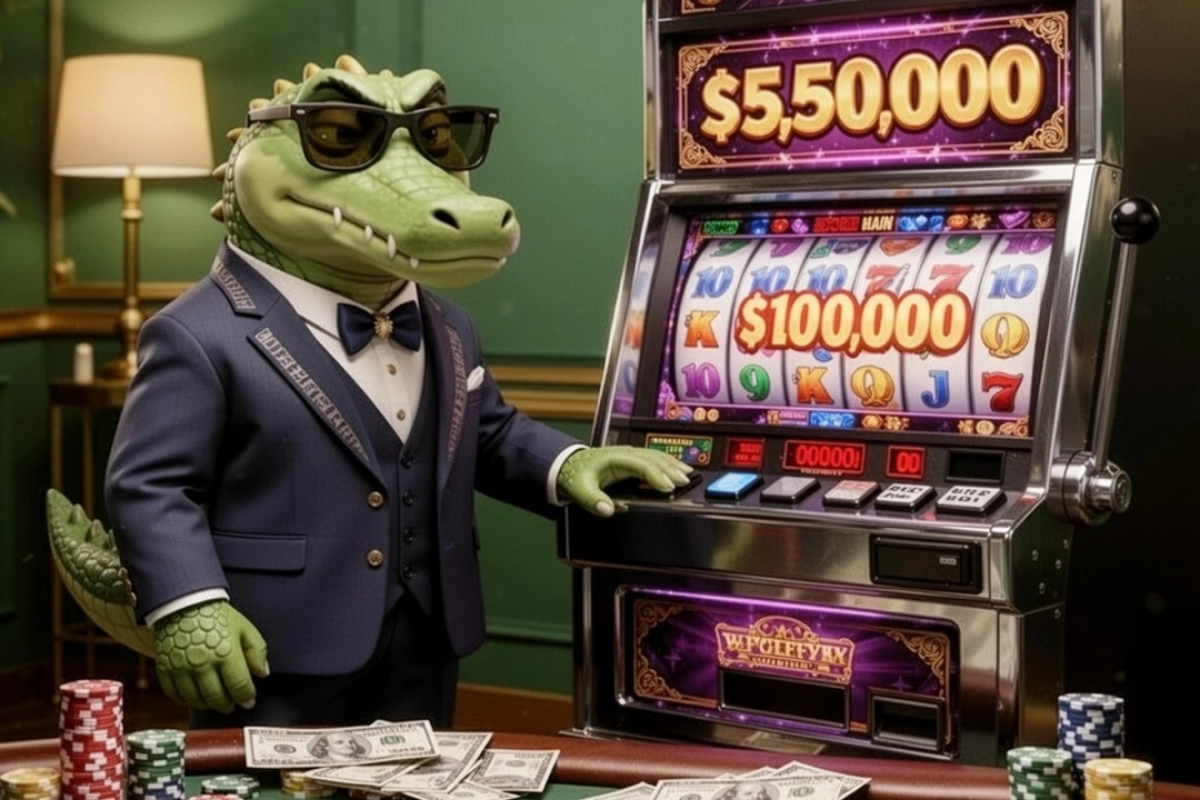
It was 2:30 AM on a Tuesday, and the slots floor was mostly quiet except for old Mrs. Patterson at machine 247. She’d been glued to that penny slot for 36 hours, fueled by lukewarm coffee and the kind of stubbornness that would make a mule look agreeable. She was up big. I’m talking enough to book a cruise around the world, or at least a very nice week in the Bahamas. I saw her glance at her watch, a nervous twitch in her eye. She had her win-goal, alright. She’d hit it, blown past it, and was now just… sitting there, feeding the machine like it was a hungry pet. I walked over, leaned in, and said, “Mrs. Patterson, perhaps it’s time to cash out? The change attendants are getting tired.” She just waved me off with her free hand, her other still jamming that MAX BET button, and promptly lost half of her winnings in the next hour. Classic. That, my friends, is why we’re talking about the win-goal strategy today. Because sometimes, the hardest part of winning isn’t winning; it’s stopping.
Understanding the Win-Goal Strategy
Alright, listen up. I’ve seen more players crash and burn at the slots trying to chase a phantom win than I have seen actual fires on the gaming floor (though there was that one time in Manila with the overheated machine, but that’s a story for another day). The win-goal strategy sounds simple, right? Set a target, hit it, walk away. But like everything else that sounds simple in a casino, it’s a minefield of human psychology and bad decisions.
What is a Win-Goal Strategy?
At its core, a win-goal strategy is about setting a predetermined profit target before you even sit down at that flashing, beeping, hypnotic slot machine. Let’s say you start with $100. You decide that if your credits hit $150, you’re done. You cash out, you go home, you don’t look back. It’s a line in the sand, a pre-agreed-upon exit point designed to lock in profits and prevent you from feeding it all back to the machine.
I’ve heard every excuse in the book for why someone didn’t stick to it. “Just one more spin, Samir.” “The machine is about to hit, I can feel it.” “I’m on a hot streak.” You know what I felt? The cold dread of watching a player’s eyes glaze over as they watched their balance drain back to zero. A win-goal is your only defense against that particular brand of madness.
Takeaway: A win-goal is your pre-set profit target, your escape hatch from the slots floor.
Why Implement a Win-Goal Strategy?
Why? Because slot machines are designed to keep you playing. Every light, every sound, every free spin bonus round is a psychological nudge to keep hitting that button. Your win-goal is your personal pushback. It’s a discipline that helps you:
- Lock in profits: This is the obvious one. You walk away a winner, even if it’s a small one.
- Prevent giving back winnings: The house edge on slots is relentless, often 5-15% or more. The longer you play, the more it grinds away at your bankroll. A win-goal cuts that exposure.
- Manage emotional play: When you’re up after a big hit, it’s easy to get cocky, to bet max on every spin. When you’re down, it’s easy to chase losses, increasing your bet size recklessly. A win-goal provides a rational boundary to emotional swings.
- Maintain bankroll management: It’s a key component of not blowing your entire paycheck on one machine in one sitting.
I once had a regular, always played the same $1 machine, who always set a win-goal of 50% of her starting bankroll. She’d hit it, cash out, and be gone. Never saw her angry, never saw her chasing. She was the exception that proved the rule: discipline pays. Most others? They thought they were smarter than the machine. They weren’t.
Takeaway: Implement a win-goal to protect profits, control emotions, and maintain smart bankroll management.
Challenges and Considerations in Win-Goal Strategies
Now, let’s get real. If setting a win-goal was foolproof, every player would walk out a winner, and I’d be out of a job. It’s not that simple. There are dragons lurking in your own head that will try to convince you to ignore your carefully laid plans.
The Problem of Exiting Early or Before Target
This is a common one. You’re up, let’s say halfway to your target, and suddenly the machine goes cold, someone wins a jackpot nearby and disrupts your focus, or you just get that gut feeling. You bail. Nothing wrong with preserving capital, but if you consistently exit before your target, you might be leaving money on the table. Or worse, you might be developing cold feet that prevent you from ever truly capitalizing on a good winning session. The flip side? You hit your target, but the machine just gave you a nice bonus round. “Just a few more spins, Samir, it’s paying out.” That’s when I’d start hovering. Because “just a few more spins” often turns into “why did I do that?”
Takeaway: Stick to your plan, but know when to adapt if conditions genuinely change, not just your mood.
Achieving a Goal as a Momentary Change
You hit your win-goal. You feel a rush. A dopamine hit. And then… what? For many, that feeling quickly fades, replaced by the urge to feel it again. The goal becomes a temporary high, not a definitive exit. This is where the casino truly wins. They want you to experience that peak, then keep playing until you’re chasing it again, all the way down to zero.
I saw a woman in Vegas once, hit a $50,000 jackpot on a progressive slot. She screamed, everyone rushed over, cocktail waitresses brought champagne. Two hours later, she’d pumped $20,000 back into various machines, chasing that same feeling. She’d achieved her goal, but she couldn’t process it as a finality. It was just a pit stop on the way to… what? More losses.
Takeaway: A win-goal isn’t just about hitting a number; it’s about accepting it as an endpoint.
Goals Restricting Happiness
This sounds counterintuitive, right? How can winning restrict happiness? Well, if your goal is too rigid, too small, or too focused on just the money, you might miss the bigger picture. Are you enjoying the game? Are you playing within your means? If hitting your win-goal feels like a chore, or if missing it sends you into a spiral, then your approach is flawed. The point of playing slots, for most, is entertainment. If your win-goal strategy sucks the joy out of spinning those reels, it’s not working for you.
Takeaway: Ensure your goals enhance, not restrict, your overall enjoyment and mental well-being.
Goals at Odds with Long-Term Progress
If you’re one of those rare advantage slot players (hunting promotions, vulturing progressive machines), a rigid win-goal might seem simplistic. For them, it’s about long-term expected value and grinding out small edges. A rigid win-goal might prevent them from capitalizing on exceptionally favorable conditions. But let’s be honest, most of you reading this aren’t professional advantage players. For the casual slots player, the win-goal is about damage control and walking away with a smile, not optimizing for marginal EV over thousands of spins.
Takeaway: Understand your play style and goals; a win-goal is a tool for recreational players, not a universal pro strategy.
Developing an Effective Exit Strategy
Alright, Samir’s going to tell you how to actually pull this off. It’s not rocket science, but it takes guts and a bit of foresight. Think of it like defusing a bomb: you gotta know when to cut the wire, and you gotta do it without hesitation.
How to Exit the Slots Floor
In the slots context, exiting means hitting that cash-out button and physically removing yourself from the gaming environment. It sounds easy. It’s not. The moment you hit your win-goal, you need to cash out your ticket and walk to the exit. Don’t just wander to another machine. Don’t go to the bar for a celebratory drink (you’ll just end up back at the slots). Cash out, put that ticket in your pocket or wallet, and head for the door. Seriously. I’ve seen countless players hit their target, then meander around the floor, spot a colorful new machine, and give it all back.
My advice? Have a specific exit routine. “Hit $150, cash out, go to the restroom, then leave.” Or “Hit $150, text my friend, then walk straight to my car.” Whatever it is, make it a habit. Break the spell the slots floor has on you.
Takeaway: When your win-goal is met, execute a pre-planned, immediate exit routine.
Determining When to Reduce Risk
This is where things get a little nuanced. Let’s say you’re up significantly, but haven’t quite hit your ultimate win-goal. This is a good time to consider reducing your exposure. For example, if you started with $100 and are now at $200, you might cash out your initial $100 stake. Now you’re playing with house money. This significantly reduces your risk of going home empty-handed. You can still aim for your win-goal, but the pressure is off.
I’ve seen this work beautifully. Players who pocket their original bankroll play looser, more confidently, and often end up hitting their goal anyway. And if they don’t, they still walk away with their initial investment intact. It’s a psychological cheat code for slots.
Takeaway: Consider cashing out your initial stake once you’re up significantly to reduce risk and play with house money.
Key Takeaways for Exit Strategies
- Be decisive: Once the goal is hit, act immediately.
- Physical removal: Get away from the slots floor.
- Partial profit-taking: Consider securing your initial stake once you’re ahead.
- Review and learn: After each session, reflect on whether you stuck to your plan and why or why not.
Takeaway: Decisiveness, physical removal, and partial profit-taking are crucial for successful exits.
Practical Steps for Win-Goal Implementation
Let’s get down to brass tacks. How do you actually make this work without turning into one of those people I had to politely escort out at 4 AM because they’d been at the same machine for 18 hours straight?
Setting Clear Targets
Your win-goal needs to be SMART: Specific, Measurable, Achievable, Relevant, and Time-bound (though the time-bound part is more about your session length). Don’t just say, “I want to win some money on slots.” Say, “I will cash out when my credits reach $125, starting from $100.” That’s a 25% profit, which is realistic but clear. A reasonable win-goal for slots might be 20-50% of your starting bankroll, depending on the volatility of the games you’re playing. Anything higher, and you’re chasing a unicorn jackpot.
I used to watch players write their targets on their player’s club cards or phone notes. Some stuck to it. Most didn’t. The difference was always commitment. Write it down, say it out loud, tell a friend who’s with you. Make it real.
Takeaway: Set clear, realistic, and specific profit targets before you start spinning.
Utilizing Stop-Loss (S/L) Limits
This is the flip side of the win-goal, and frankly, it’s even more important for slots players. A stop-loss is your predetermined maximum loss. If you start with $100, you might decide that if your credits drop to $40, you’re done. Period. No chasing. No “just one more spin to trigger the bonus.” A stop-loss is your parachute. It prevents you from catastrophic freefall.
The number of times I’ve seen players blow through their stop-loss (because they didn’t have one, or ignored it) is uncountable. They start with $100, lose $60, then try to win it back with bigger bets, lose another $40, then go to the ATM for another $100. It’s a road to financial ruin, and I’ve watched it unfold hundreds of times on the slots floor. Don’t be that person.
Takeaway: Always set a stop-loss to limit your maximum losses and protect your bankroll.
Understanding Take-Profit (T/P) Targets
This is just another way of saying “win-goal.” It’s the point where you take your profits and walk. With slots, there’s no automation—it requires your own iron-clad discipline. The key here is to have it, and to honor it. Don’t move the goalposts once you’re close. Don’t get greedy when you see your balance climbing. The casino is a master of psychological warfare; your take-profit target is your shield.
Takeaway: A take-profit target is your win-goal; commit to it and don’t let greed move the number.
Considering Your Risk Level
Are you a high-roller playing high-limit slots with money you can afford to lose, or are you a casual player trying to stretch a small bankroll for entertainment? Your win-goal and stop-loss should reflect your personal risk tolerance. If a 40% loss will ruin your week, then set a tighter stop-loss at 20-30%. If a 25% win isn’t exciting enough, maybe your win-goal is too low, or you need to adjust your expectations of how much you can realistically win on slots.
I’ve seen high-rollers bet $100 per spin without blinking, and I’ve seen folks sweat over spinning at 40 cents. Know yourself, know your limits, and set your goals accordingly. Don’t gamble with rent money, ever. That’s not a win-goal strategy; that’s a recipe for disaster.
Takeaway: Align your win-goal and stop-loss with your personal risk tolerance and financial situation.
Advanced Concepts in Exit Strategies
Alright, now for some of the fancy stuff. While these terms usually come from the trading world, the underlying principles can be applied to understanding your own playing patterns and informing your exit points. Just don’t go trying to chart the RTP of individual machines in real-time, alright? Samir will have to ask you to stop.
What Are the Fibonacci and Gann Levels?
These are tools used in technical analysis to predict potential support and resistance levels, or price targets. In trading, Fibonacci retracement levels (like 38.2%, 50%, 61.8%) are used to identify where a price might reverse or consolidate. Gann levels are based on geometric angles and time cycles. For a slots player, these aren’t directly applicable for predicting when a machine will hit a bonus, obviously. You can’t Fibonacci your way to a jackpot. However, the concept of these tools—identifying potential turning points or targets based on historical patterns—can be loosely adapted. For instance, if you’re tracking your own play over many sessions, you might notice that after a certain percentage gain, your luck tends to turn or you tend to get reckless. That could be your personal ‘Fibonacci level’ for an exit.
But let’s be clear: this is not about predicting the next spin. It’s about recognizing patterns in your own behavior or the general flow of your sessions. If you consistently find yourself giving back profits after a 40% gain, that 40% becomes your personal threshold for exiting.
Takeaway: While not directly applicable to slot outcomes, the concept of identifying personal ‘turning points’ or profit thresholds can be useful.
What Is a Moving Average?
A moving average smooths out data over a period to identify trends. For example, a 50-day moving average shows the average value over the last 50 days. In trading, a cross below a moving average can be a sell signal. Again, this isn’t about predicting the next reel result. But think about it this way: your ‘moving average’ might be your average win/loss over your last 10 slots sessions. If you notice your current session is significantly outperforming that average, it might be a strong signal to lock in profits. Or if your current losses are way below your ‘average’ performance, it might be time to hit that stop-loss. It’s about recognizing when you’re in an outlier session—good or bad—and acting accordingly.
Essentially, it’s about having a baseline. If you usually win $30 on a good session, and suddenly you’re up $150, that’s an outlier. Don’t ride it back down to zero. Take the win.
Takeaway: Use the concept of a ‘moving average’ to identify outlier sessions (exceptionally good or bad) and inform your exit decisions.
Top Mistakes Slots Players Make (Samir’s Floor-Level Examples)
Alright, gather ’round. This is where I spill the beans on the boneheaded moves I’ve seen slots players make that cost them dearly. Learn from their mistakes, not your own.
1. Ignoring the Win-Goal: The “Hot Machine” Delusion.
I saw a guy hit a $5,000 bonus on a Buffalo slot. His win-goal was $500. He was ecstatic, jumping up and down. Then he started yelling, “This machine is on fire! It’s gonna hit again!” Two hours later, he was asking me where the nearest ATM was, having blown through all his winnings and his original stake. The “hot machine” is a mirage. The RNG doesn’t remember what it paid out five minutes ago. Your win-goal is your reality check.
2. Moving the Goalposts: The “Just One More Spin” Trap.
A woman at a penny slot hit her $200 win-goal. She smiled, hit the cash-out button, then paused. “Oh, just one more spin, I’m feeling it.” She won another $50 on a small bonus. “See?!” she exclaimed. She stayed for another hour, trying to recreate that feeling, and left down $100 from her starting point. Greed is a powerful motivator, but it’s a terrible strategist.
3. No Stop-Loss: The “Get It Back” Spiral.
This is the most common and most destructive mistake on the slots floor. A young guy was down $80 on a $100 bankroll. His stop-loss should have been $60 or $70. Instead, he kept increasing his bet per spin, trying to “get it back fast.” He went to the ATM twice, got cash advances, and left the casino $500 poorer and looking like he’d seen a ghost. Never chase losses on slots. Ever. Your stop-loss is non-negotiable.
4. Setting Unrealistic Goals: The “Jackpot Mentality.”
Some people come in with $50 and a win-goal of $5,000. While it’s technically possible to hit a massive progressive, planning for it is like planning to be struck by lightning. This leads to reckless play, max-betting constantly, and burning through your bankroll in minutes. Set goals that are achievable with a reasonable amount of luck and disciplined play.
5. Emotional Exits: Bailing Too Early or Staying Too Long Based on Feelings.
The person who cashes out after a small $20 win because they feel “unlucky” even though they’re still within their plan, or the person who stays glued to a machine for hours because they “feel like it’s about to pay” despite massive losses. Emotions are the enemy of discipline. Your win-goal and stop-loss are your rational anchors.
Takeaway: Avoid the hot machine fallacy, moving goalposts, chasing losses, unrealistic targets, and emotional decisions.
Final Thoughts
So, there you have it. The win-goal strategy for slots. It’s not some magic bullet that guarantees you’ll hit a jackpot. It’s a shield, a tool for discipline, a way to play smarter instead of just spinning harder. I’ve seen enough self-inflicted wounds on the slots floor to tell you this much: the house always has an edge (and on slots, it’s a big one), but your biggest enemy is usually yourself.
Set your target, stick to it, and when you hit it, cash out and walk away. Don’t linger around the floor. Don’t get greedy. Don’t let the lights and the sounds and the promise of the next big bonus round convince you that destiny is calling. Destiny called, you answered, and you won. Now go enjoy it. Because the moment you hesitate, the moment you second-guess your plan and hit that “play again” button, that’s when the machine starts to whisper, and believe me, those whispers are rarely in your favor.