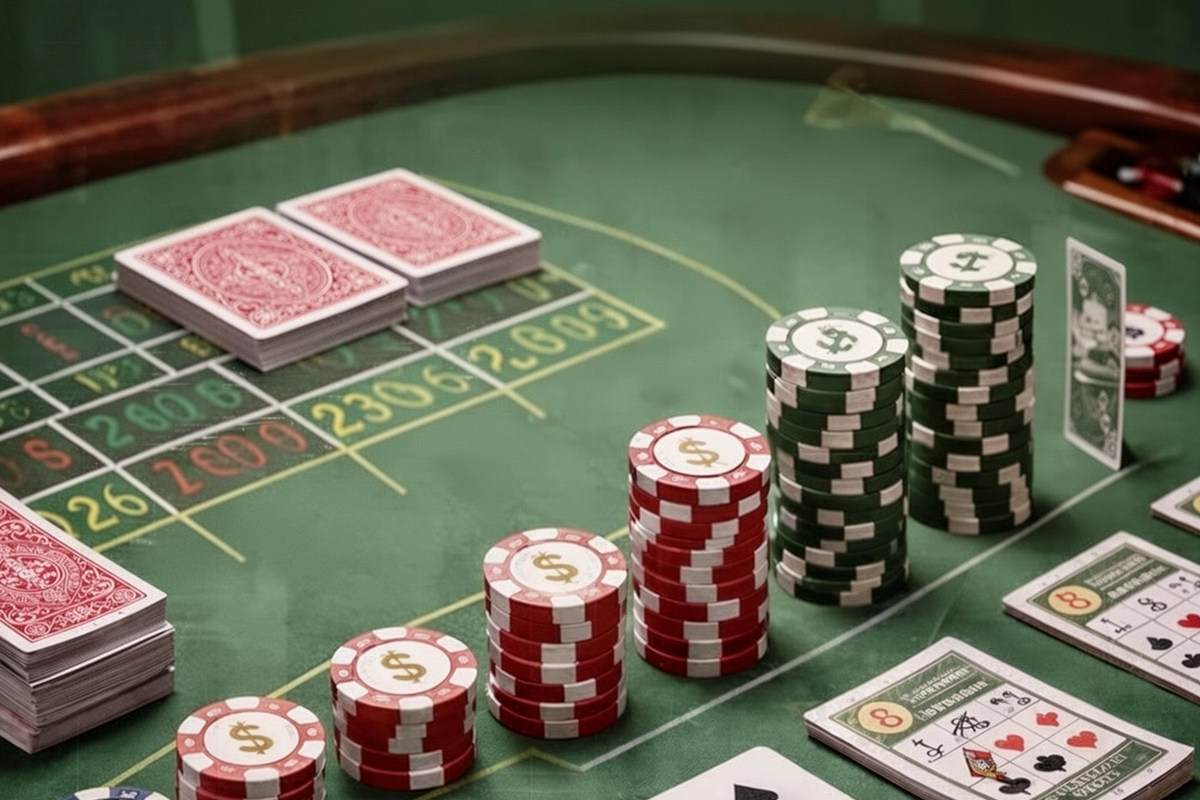
Alright, listen up. Samir here. You think you know blackjack? You’ve played a few hands on an app, maybe hit up a casino in Vegas during a bachelor party, felt like a high roller with your $25 chips. Cute. I’ve seen more money disappear in a single shoe than most of you will make in a year, and I’ve watched enough players self-destruct over a bad beat to write a tragedy. So, when it comes to something like 2 decks blackjack, don’t come at me with your theories unless you’ve stood on a floor for 12 hours straight, watching every twitch, every tell, every desperate prayer to a god who doesn’t play cards.
I remember one night in Macau, 4 AM, the high-limit room was a graveyard except for one table. This guy, Mr. Chen, had been playing 2 decks blackjack for hours, up a ridiculous sum, down a ridiculous sum, repeat. He was on a heater, then a cooler, then back again. Dealers were rotating every 20 minutes because his energy was draining them. He was playing perfect basic strategy, but the minute the cards turned against him, he’d start barking at the dealer, blaming the universe. That’s when you know, even with the best rules, the human element is always the wild card. Stick with me, and I’ll tell you what you need to know about 2 decks blackjack before you end up like Mr. Chen, blaming the air conditioning for your losses.
The Rules of 2 Decks Blackjack
First things first, let’s lay out the battlefield. 2 decks blackjack isn’t just ‘blackjack with two decks.’ It’s a specific set of rules that often comes with its own quirks. Knowing these cold is the difference between making smart plays and just throwing money into the green felt abyss. Most players think they know the rules, but they only know the feel of the rules. I’m giving you the hard facts.
Soft 17
This is a big one. Does the dealer hit or stand on a soft 17 (A-6)? In most 2 decks blackjack games, the dealer will hit on a soft 17 (H17). This slightly increases the house edge. If you see a game where the dealer stands on a soft 17 (S17), grab that table. It’s a diamond in the rough, a little gift from the casino gods, and it shaves a decent chunk off the house’s advantage. Most players don’t even notice this detail until their bankroll is already bleeding out.
Samir’s Take: Always check the felt for H17 or S17. It’s the first thing I look for. If you don’t, you’re playing blind.
Double On Any Two Cards
This is standard and expected in 2 decks blackjack. You should be able to double down on any two cards you’re dealt, regardless of their value. This is a player-friendly rule that you absolutely must utilize when basic strategy dictates. I’ve seen guys double down on a 12 against a dealer’s 5, then complain when they get a 3. That’s not the rule’s fault, pal, that’s your faulty execution.
Samir’s Take: Don’t be afraid to double down when the numbers say to. It’s a tool, not a gamble.
Splitting
Generally, you can split any pair, up to a certain number of hands (usually 3 or 4). This is another core strategy element. What gets tricky, and where I see players make mistakes, is splitting certain pairs against certain dealer upcards. Never split 10s. Never. I’ve had to physically restrain a guy once who was about to split two face cards. He looked at me like I was crazy. I looked at him like he was about to set fire to his own money.
Samir’s Take: Learn which pairs to split and, more importantly, which ones not to. Your 20 is money in the bank.
Double After Splitting
This is where 2 decks blackjack can get really interesting, and it’s a rule you should always look for. Being able to double down after splitting a pair (DAS) is a huge advantage. It gives you more flexibility and significantly reduces the house edge. If you see a game that doesn’t allow DAS, you might as well be playing with one hand tied behind your back.
Samir’s Take: DAS is your friend. If it’s available, use it. If not, consider finding a different table.
Hit On Aces That Have Been Split
This is almost always the case in 2 decks blackjack. If you split aces, you usually only get one card on each ace. Some rarer games might allow you to hit again, but don’t count on it. This is why splitting aces, while powerful, isn’t a guaranteed win. You’re hoping for a 10-value card on each, not building a monster hand. I’ve seen players get furious when they split aces and get a 3 on one and a 4 on the other. What did you expect, a parade?
Samir’s Take: Split aces, but understand the limitation. It’s a good play, not a magic trick.
No Hole Card
This is common in non-US casinos and some online 2 decks blackjack games. In a no hole card game, the dealer doesn’t take a second card until all players have completed their actions. If the dealer shows an Ace or a 10 and then gets a blackjack, you lose your double down bets and split bets, not just your initial wager. This is a significant disadvantage. Always be aware if the dealer is taking a hole card or not.
Samir’s Take: No hole card means more risk on your doubles and splits. Factor that into your decisions.
Surrender
Not always available in 2 decks blackjack, but when it is, it’s a powerful option. Early surrender (before the dealer checks for blackjack) is incredibly rare and favorable. Late surrender (after the dealer checks for blackjack) is more common. It allows you to give up half your bet if you have a terrible hand against a strong dealer upcard. It’s not glorious, but it saves you money in the long run. I’ve seen players refuse to surrender out of pride, then watch their whole stack vanish. Pride doesn’t pay the bills.
Samir’s Take: Surrender when basic strategy tells you to. It’s cutting your losses, not admitting defeat.
Blackjack Payouts
This is critical. A standard blackjack payout is 3:2. If you see a 6:5 payout for blackjack, walk away. Immediately. Do not pass Go, do not collect $200. This rule alone drastically increases the house edge and makes 2 decks blackjack a much worse game for you. I’ve seen casinos try to sneak this in on tables in high-traffic areas, hoping tourists won’t notice. I notice. And I judge.
Samir’s Take: 3:2 or bust. Anything less is a scam. Period.
How 2 Decks Blackjack Rules Affect Gameplay
Now that we’ve covered the specifics, let’s talk about how these rules actually hit the felt. Because knowing the rules is one thing; understanding their impact on your wallet is another entirely. This isn’t just theory; this is what I’ve seen play out night after night.
Favorable Rules
When you’re playing 2 decks blackjack, you’re looking for a combination of rules that tilt the odds, even slightly, in your favor. These are the golden tickets:
- Dealer Stands on Soft 17 (S17): This is huge. It reduces the house edge by about 0.22%. Over thousands of hands, that’s real money.
- Double Down After Splitting (DAS): Another big one. Reduces the house edge by about 0.14%. It gives you more strategic flexibility and allows you to capitalize on good situations.
- Resplitting Aces: If you can resplit aces, that’s a bonus, though it’s rare in 2 decks.
- Late Surrender: While not a massive swing, it helps you mitigate losses on truly terrible hands. It’s like having a parachute for a really bad jump.
- 3:2 Blackjack Payout: Non-negotiable. This is the baseline for a fair game.
Samir’s Take: Seek out tables with S17 and DAS. These are the fundamentals of minimizing the house edge in 2 decks blackjack.
Unfavorable Rules
And then there are the traps. The rules designed to quietly siphon off your cash without you even realizing it until it’s too late. I’ve seen these rules turn promising nights into bitter mornings.
- Dealer Hits on Soft 17 (H17): The most common unfavorable rule. It’s not a deal-breaker, but you need to adjust your strategy.
- No Double Down After Splitting (No DAS): This limits your options and increases the house edge.
- No Surrender: You’re forced to play out every hand, even the ones that are statistically guaranteed losers.
- No Hole Card: As mentioned, this can burn you on doubles and splits if the dealer has a blackjack.
- 6:5 Blackjack Payout: This is a casino’s way of saying, “Please, just give us your money.” Avoid at all costs. It increases the house edge by over 1.39% compared to 3:2. That’s enough to make even a perfect basic strategist bleed.
Samir’s Take: Avoid 6:5 tables like you avoid a drunk high roller trying to hit on the cocktail waitress. It’s trouble.
Basic Strategy for 2 Decks Blackjack
Basic strategy isn’t a suggestion; it’s the law. It’s what you do when you want to play optimally, minimize the house edge, and not get laughed out of the pit by me. It’s mathematically proven. Any deviation, unless you’re counting cards with a superhuman memory, is just ego getting in the way of good sense. I’ve seen players with years of experience make the same dumb mistakes, thinking their ‘gut feeling’ was better than centuries of probability. It never is.
For 2 decks blackjack, the basic strategy charts are slightly different than for 6 or 8 decks. Why? Because the fewer decks mean the card composition changes more dramatically. It’s subtle, but it matters. Don’t just grab any old chart off the internet; make sure it’s specific to 2 decks.
Strategy Variations for 2 Decks, S17, DAS, NS
This is where it gets specific. Your basic strategy chart needs to factor in the exact rules of the game you’re playing. Let’s break it down for a common, favorable 2 decks blackjack game:
- 2 Decks: The probability of certain cards appearing changes slightly.
- S17 (Dealer Stands on Soft 17): This is a good thing. Your strategy chart will reflect slightly different decisions for soft totals, particularly against a dealer’s 2 or 3.
- DAS (Double After Splitting): This allows for more aggressive doubling in certain split situations.
- NS (No Surrender): If surrender isn’t an option, you’ll have to play out those tough hands (like 16 vs. 10) by hitting, which is often painful but correct.
Here are some key adjustments you’ll see in a 2-deck strategy compared to multi-deck:
- Hard Totals:
- Hit on 12 vs. Dealer 2 or 3 (in a multi-deck, you might stand on 12 vs. 2 or 3).
- Stand on 12 vs. Dealer 4, 5, 6.
- Always hit 8 or less.
- Always stand on 17 or more.
- Soft Totals:
- Double A-2 through A-7 if the dealer has a 4, 5, or 6.
- Double A-7 vs. Dealer 2 (if S17) or 7, 8.
- Stand on A-8 and A-9.
- Pairs:
- Always split Aces and 8s.
- Never split 10s.
- Split 2s and 3s vs. Dealer 4-7.
- Split 4s vs. Dealer 5-6 (if DAS is allowed, otherwise just hit).
- Split 6s vs. Dealer 3-6.
- Split 7s vs. Dealer 2-7.
- Split 9s vs. Dealer 2-9 (but not 7).
This isn’t a comprehensive chart, but it highlights some common deviations. Get a proper 2 decks basic strategy chart and memorize it. Or keep it discreetly next to you if the casino allows it. I’ve seen guys try to use their phone for a chart, and that’s a quick way to get me to come over and have a ‘chat.’
Samir’s Take: Basic strategy is your bible. Know it, live it. Don’t improvise unless you enjoy losing.
Top Mistakes Players Make in 2 Decks Blackjack
Oh, where do I even begin? I’ve seen it all. The desperate, the deluded, the ones who think they’re smarter than math. Here are the classics, the blunders that drain bankrolls faster than a leaky faucet:
1. Ignoring the Rules on the Felt
This is probably the biggest one. Players sit down, throw down their money, and start playing without even glancing at the rules posted on the table. Is it H17 or S17? Is it 3:2 or 6:5? Can you DAS? These aren’t suggestions; they dictate the entire game. I once watched a guy lose five grand because he kept hitting his soft 17 against a dealer’s 6, completely unaware the dealer was standing on S17. He thought he was playing smart. He was just playing dumb.
2. Deviating from Basic Strategy Based on ‘Feelings’
“I just feel like a 10 is coming.” “Nah, I’m gonna hit this 15 against a 6, I’m due.” These are the death knells of a blackjack player. Basic strategy is not about what you feel; it’s about what’s statistically optimal. Every time you deviate, you’re giving the house more money. I’ve seen players get lucky once or twice doing this, then they think they’re geniuses. The casino loves these guys. They’re repeat customers, eventually.
3. Not Doubling Down When Appropriate
Fear. It’s a powerful motivator. Players get a 9 against a dealer’s 3, 4, 5, or 6 and they’re afraid to double, even though basic strategy says to. They want to play it ‘safe.’ Playing it safe by not making the mathematically correct play is just leaving money on the table. Or, more accurately, leaving it in the casino’s vault.
4. Over-Splitting or Under-Splitting
Splitting 10s (the cardinal sin) or not splitting 8s against a dealer’s 6 are common mistakes. Your 20 is a powerful hand; don’t break it up hoping for two more powerful hands. Conversely, not splitting 8s against a 6 means you’re stuck with a 16, one of the worst hands in blackjack. Splitting 8s gives you two chances to improve a bad situation. It’s not about being aggressive; it’s about being smart.
5. Chasing Losses
This isn’t specific to 2 decks blackjack, but it’s the most common reason I’ve seen players blow their entire bankroll, and sometimes more. They’re down, they start making bigger bets, ignoring basic strategy, hoping for a miracle card. There are no miracle cards, only probabilities. I’ve had to cut off more players for chasing losses than for anything else. It’s a sad sight, watching someone go from confident to desperate in a matter of hours. The pit is full of cautionary tales.
Samir’s Take: Play smart, not with your emotions. Stick to the rules, stick to basic strategy, and know when to walk away.
The Final Word from Samir: Play Smart, Not Hard
Look, 2 decks blackjack can be one of the best games in the casino, offering a lower house edge than many others, provided you find the right rules and play perfectly. It’s not about luck, not entirely. It’s about discipline, understanding the numbers, and keeping your head when everyone else is losing theirs.
I’ve seen the highest highs and the lowest lows. I’ve seen fortunes made and lost on a single card. The difference between the players who walk away with a smile (even a small one) and those who stumble out, defeated, is rarely about the cards they were dealt. It’s about how they played them. It’s about whether they understood the game, or just thought they did.
So, study your basic strategy for 2 decks blackjack, learn the nuances of the rules, and for the love of all that is holy, check that payout for blackjack. Play smart, play disciplined, and maybe, just maybe, you won’t end up as another one of my war stories. Now, if you’ll excuse me, I hear a dealer calling for a pit boss. Probably someone trying to double down on a 17 again.