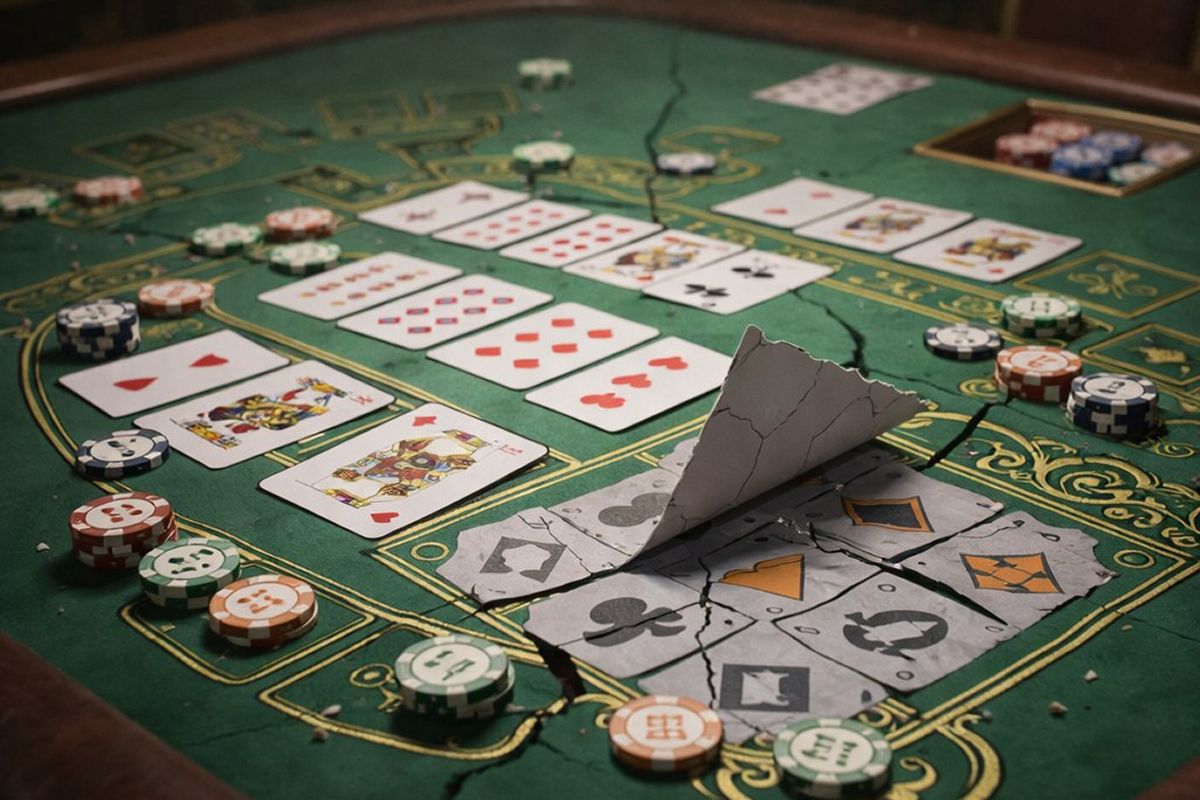
Alright, listen up. It’s Samir here. I’ve seen enough Baccarat tables to know that most of you come in here thinking you’ve cracked the code. You’ve got your little notebooks, your systems, your lucky charms. And then the cards hit the felt, a few hands go sideways, and suddenly that confident swagger turns into a desperate plea to the universe. I’ve seen grown men, worth more than your house, turn green when a streak didn’t go their way. I’ve seen ‘em try to argue with the dealer about a card that was clearly dealt. It’s a circus, I tell ya. But if you’re gonna play, you might as well play smart. And that means understanding how to switch between Banker and Player based on patterns, or at least, what you think are patterns.
Nobody’s got a crystal ball, least of all me. But after years of watching the ebb and flow, the highs and the catastrophic lows, you pick up a few things. You learn what’s real, what’s wishful thinking, and what’s just plain stupid. So, let’s talk about Baccarat patterns, because everyone thinks they see ‘em, but few truly understand what they’re looking at.
Understanding Baccarat Pattern Strategies
Every single player who sits down at a Baccarat table, from the wide-eyed newbie to the seasoned whale, is looking for a pattern. It’s human nature. Our brains are wired to find order in chaos. And Baccarat, with its streaks of Banker or Player, seems to offer that order on a silver platter. You see those scorecards? The ones filled with red and blue circles? Those aren’t just for decoration. They’re fuel for the pattern-spotting fire.
The truth is, Baccarat is a game of chance. Each hand is independent. The past doesn’t predict the future. But tell that to a guy who’s just dropped a quarter-million on a six-hand Player streak. He’s convinced the next one’s gotta be Banker. And sometimes, it is. Sometimes, it isn’t. That’s the beauty, and the brutality, of the game.
Common Patterns in Baccarat
So, what are these patterns everyone’s so obsessed with? You’ve got your Big Road, your Bead Plate, your Big Eye Boy, Small Road, and Cockroach Pig. Don’t ask me who came up with these names; probably some guy who spent too long staring at the scorecards at 3 AM. But they’re all essentially different ways of visualizing the results of previous hands to identify perceived streaks or chops.
- The Big Road: This is your main scorecard. It shows the results of each hand (Banker, Player, or Tie) in columns. A new column starts whenever the result switches from Banker to Player or vice-versa. Players look for long streaks here, hoping to ride the wave.
- The Bead Plate: A simpler, hand-by-hand representation, showing every single result in order, filling rows before moving to the next. Good for a quick glance, not so much for deep pattern analysis.
- Derived Roads (Big Eye Boy, Small Road, Cockroach Pig): These are where it gets fancy and, frankly, a bit convoluted for the average Joe. They attempt to show how ‘choppy’ or ‘streaky’ the previous results have been, looking for patterns within patterns. It’s like trying to find a pattern in the way the smoke curls from a cigarette – sometimes it’s there, sometimes it’s just smoke.
I’ve watched players spend hours meticulously marking these cards, completely convinced they’re on the verge of uncovering the secret. They’ll swear by a ‘zigzag’ pattern, or a ‘dragon tail,’ or a ‘double chop.’ And sometimes, for a few hands, it’ll look like they’re right. Then the cards will inevitably do something unexpected, and you’ll see the life drain from their eyes. It’s a tale as old as time on my floor.
Takeaway: Patterns are a mental construct, not a guarantee. The cards don’t care about your scorecards.
The Golden Secret Baccarat Strategy
Ah, the ‘Golden Secret.’ Every few years, some self-proclaimed guru pops up with a ‘foolproof’ system. They write a book, sell a course, and promise you riches. And inevitably, I see their disciples walk onto my floor, armed with their ‘secret,’ only to lose their shirts just like everyone else. The ‘Golden Secret’ is usually some variation of martingale, or following a perceived streak, or switching after a certain number of losses. It’s always something that sounds good on paper but crumbles under the pressure of real money and real variance.
The closest thing to a ‘golden secret’ in Baccarat, if you want to call it that, is understanding the house edge and managing your bankroll. That’s it. There’s no magic formula that tells you whether the next hand will be Banker or Player. Anyone telling you otherwise is selling you something.
I remember this one guy, swore by his ‘Golden Secret.’ He’d been playing for hours, up a decent sum. Then he hit a patch where his ‘secret’ told him to keep doubling down on Player, but Banker kept winning. He got louder, sweatier, and his stack got smaller. By the time he walked away, he looked like he’d seen a ghost. His ‘secret’ ended up costing him a small fortune. No secret is stronger than the casino’s math.
Using the Golden Secret Strategy
If you’re still determined to try a ‘Golden Secret’ or any pattern-based strategy to switch between Banker and Player, here’s the cold, hard truth: use it as a framework for your betting, not as a predictor of outcomes. It’s a way to structure your play, to give you a sense of control, but it won’t change the odds. Many of these strategies involve:
- Following the Shoe: Betting with the prevailing streak (e.g., if Banker wins three in a row, bet Banker again).
- Opposing the Shoe: Betting against the prevailing streak (e.g., if Banker wins three in a row, bet Player, assuming a ‘chop’ is coming).
- Alternating: Betting Player, then Banker, then Player, etc., looking for a ‘choppy’ pattern.
- Martingale or similar progressions: Increasing your bet after a loss, hoping to recover with a win. This is the fastest way to hit the table limit or blow your bankroll. I’ve seen more crying jags from failed Martingale players than from any other strategy.
My advice? If you’re going to try one, set strict stop-loss limits. Decide beforehand how much you’re willing to lose, and when you hit it, walk away. Don’t chase. Chasing is how good nights turn into terrible mornings, and how players end up on my “watch list.”
Takeaway: ‘Secrets’ are usually just structured ways to lose money. Manage your bankroll above all else.
Baccarat Bet Types
Before you even start thinking about switching between Banker and Player, you need to know what you’re actually betting on. There are three main bets in Baccarat:
- Banker: This bet pays 0.95 to 1 (meaning you get your bet back plus 95% of it, due to a 5% commission). It has a slightly lower house edge, about 1.06%. This is why you see so many experienced players leaning on Banker.
- Player: This bet pays 1 to 1. The house edge is slightly higher than Banker, around 1.24%.
- Tie: This bet usually pays 8 to 1 or 9 to 1, depending on the casino. The house edge on a Tie bet is astronomical, often over 14%. It’s a sucker bet, plain and simple. I’ve seen people throw good money after bad on Tie bets, thinking they’re due. They’re not.
There are also side bets, like Player Pair or Banker Pair, which offer even higher payouts but come with even worse odds. Just like the Tie, these are for entertainment, not for serious play. If you’re trying to switch between Banker and Player based on patterns, stick to the main bets. Don’t get distracted by the shiny, high-payout side bets. They’re designed to drain your wallet faster than a bad tequila shot.
Takeaway: Banker bet has the best odds, Player is second, Tie is a money pit.
Top Tips for Baccarat Strategies
Forget the hocus pocus. Here are some practical tips, born from years of watching people win and, more often, lose their shirts. These aren’t about predicting the cards; they’re about playing smart.
Siding with the Banker
If you’re going to bet, the Banker bet is statistically your best option. It has the lowest house edge. Period. That small 5% commission is there for a reason – because the Banker hand wins slightly more often than the Player hand. This isn’t a pattern; it’s a mathematical advantage built into the game’s rules.
So, if you’re asking me, Samir, what’s the default bet? It’s Banker. You’ll see many players, especially the regulars, stick to Banker for long stretches. They’re not seeing a pattern; they’re just playing the percentages. It’s the least bad bet in a game where the house always has an edge.
Top Tip: If you’re aimlessly switching or unsure, default to Banker. It’s the closest thing to a ‘safe’ bet in a casino.
Siding with the Player
When do you side with the Player? Well, if you’re following one of those pattern strategies, you might switch to Player when you perceive a ‘chop’ or a streak of Player wins. But from a purely mathematical standpoint, you’re giving up a tiny bit of edge. The Player bet pays 1-to-1, which feels better than Banker’s 0.95-to-1, but that feeling doesn’t change the underlying probability.
Some players will switch to Player if Banker has won, say, five times in a row, thinking it’s ‘due’ for a change. This is the Gambler’s Fallacy in action. The cards don’t care what happened before. But hey, if it makes you feel better to switch, go for it. Just don’t expect the universe to align itself with your betting strategy.
Top Tip: Only switch to Player if you have a specific pattern you’re following, or simply for variety. Don’t expect better results.
Statistical Considerations of Patterns in Baccarat
This is where I usually lose half the room, but it’s crucial. Baccarat is played with multiple decks (usually 6 or 8). After each hand, the cards are returned to the shoe (unless it’s a discard pile, but the point remains). This means that each hand is an independent event. The probability of Banker winning, Player winning, or a Tie happening doesn’t change based on the previous results.
Think about flipping a coin. If you get heads ten times in a row, what’s the probability of the next flip being heads? Still 50%. Baccarat is more complex, but the principle is the same. The notion of ‘streaks’ and ‘chops’ is a human observation of random distribution, not a predictive force. You’ll see streaks of red, and you’ll see streaks of black on a roulette wheel. It doesn’t mean the opposite color is ‘due.’ It just means randomness can look streaky sometimes.
The casino makes its money on the house edge, which is the built-in mathematical advantage in every game. For Baccarat, it’s low, which is why it’s popular with high rollers. But it’s still there. No pattern strategy, no matter how intricate, can overcome that fundamental math over the long run. If it could, casinos wouldn’t offer Baccarat, or I’d be retired on a private island, not writing this for you.
Takeaway: Baccarat is random. Patterns are illusions. The house edge is real.
Frequently Asked Questions About Baccarat Strategies
I hear these questions every single night. People asking the same things, hoping for a different answer. Here’s what I tell them, usually with a sigh.
What is the safest bet in Baccarat?
The safest bet in Baccarat, statistically speaking, is the Banker bet. It has the lowest house edge (around 1.06%). This means that, over a very long period of play, you will lose less money betting on Banker compared to betting on Player (1.24% house edge) or Tie (over 14% house edge).
Now, ‘safest’ is a relative term in a casino. You’re still going to lose money in the long run. But if you’re trying to minimize your losses and maximize your playing time, Banker is your best bet.
What is the best strategy for Baccarat?
The ‘best’ strategy for Baccarat isn’t about predicting patterns; it’s about bankroll management and understanding the odds. Here’s my no-nonsense advice:
- Bet on Banker: Most of the time. It has the lowest house edge.
- Avoid the Tie Bet: Seriously, just don’t. It’s a waste of money.
- Set a Budget: Decide how much you’re willing to lose before you even sit down. Stick to it. When it’s gone, walk away. No ‘one last hand.’ No ‘I’ll just get it back.’
- Set a Win Limit: Just as important as a loss limit. If you’re up a good amount, cash out some of your winnings. Don’t let a good night turn bad because you got greedy.
- Don’t Chase Losses: This is the cardinal sin. I’ve seen it destroy fortunes and lives. If you’re losing, it’s not the universe telling you to bet more. It’s telling you to stop.
- Don’t Believe in ‘Systems’: They don’t work. The game is random.
That’s the strategy. It’s boring, it’s not flashy, and it won’t make you rich overnight. But it’s the only one that stands a ghost of a chance of keeping you in the game longer and reducing your overall losses. The best strategy is knowing when to quit.
Should you always bet on the banker in Baccarat?
From a purely statistical perspective, betting on the Banker consistently is the optimal play because it has the lowest house edge. This means that, over an infinite number of hands, you would lose the least amount of money per hand by always betting Banker. However, ‘always’ is a strong word, and Baccarat is also a game played for enjoyment.
Many players find it boring to always bet Banker. They want the thrill of switching, of ‘reading the shoe,’ of trying to beat the odds. If you want to switch to Player based on a perceived pattern, go ahead. Just understand that you’re slightly increasing the house’s advantage over you. You’re trading a tiny bit of mathematical edge for the psychological satisfaction of following your gut or your chosen ‘system.’ Just don’t come crying to me when your ‘gut feeling’ costs you your rent money.
What bet has the highest payout in Baccarat?
The Tie bet typically has the highest payout in Baccarat, usually 8 to 1 or 9 to 1. Some side bets, like specific pairs or combinations, can offer even higher payouts. However, these high payouts come with a significantly increased house edge, meaning the probability of these events occurring is very low. They are designed to entice players with the promise of a big win, while statistically being the worst bets on the table.
A high payout often means a very low chance of winning. If you’re looking for the highest payout, you’re usually looking for the biggest gamble with the worst odds. My advice? Stick to the main bets. Those side bets are like the free drinks – they seem great at first, but they always come with a hidden cost.
So, there you have it. You can spend your time marking up those scorecards, trying to find meaning in randomness, or you can play smart. The casino floor is a wild place. It’s loud, it’s chaotic, and it’s always trying to take your money. Understand the game, manage your bankroll, and don’t fall for the illusions. That’s how you survive. That’s how you walk out with some of your dignity, and maybe even a little cash, intact. Now go play, but don’t say I didn’t warn you.