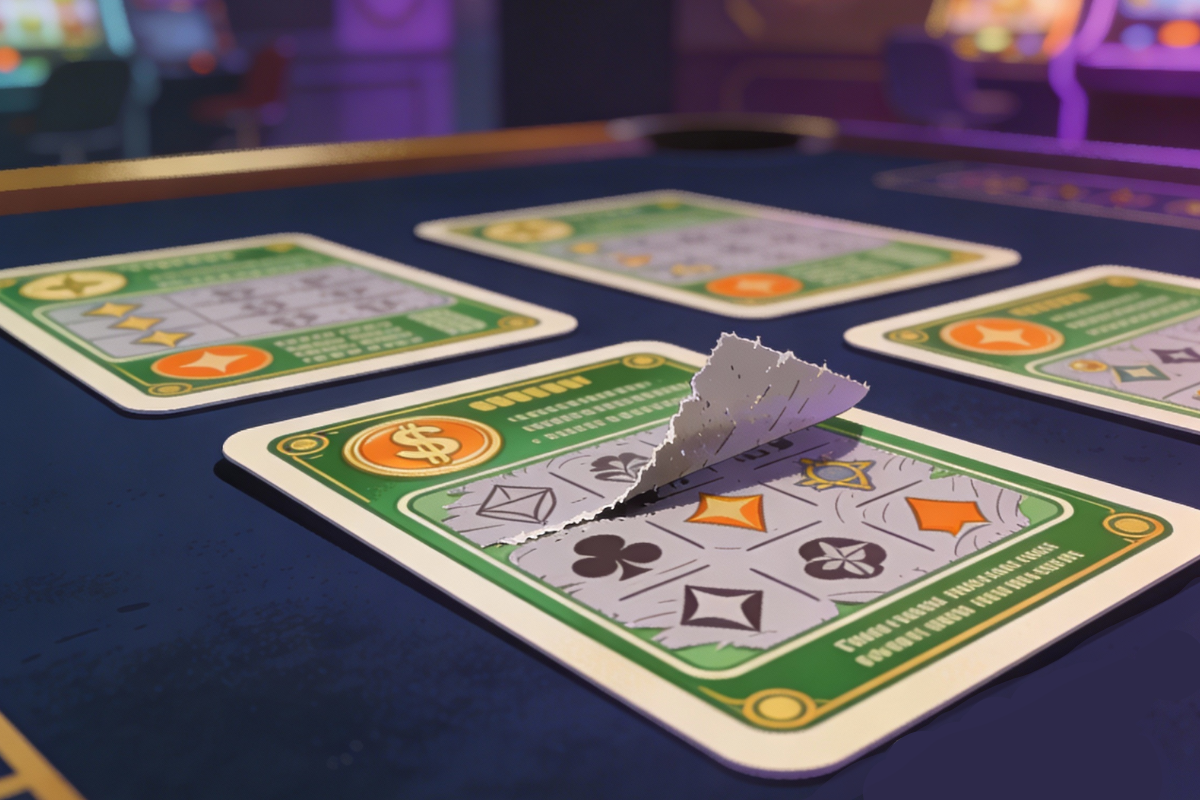
Alright, listen up. It was a Tuesday afternoon, dead quiet in the high-limit room, which is often more unnerving than a Friday night stampede. You’ve got a couple of regulars nursing their single malt, and then there’s this new guy, Mr. Chen. He’s been at the Baccarat table for an hour, looking like he’s trying to solve the national debt with every card dealt. Suddenly, he pushes away, grabs a stack of those shiny, colorful scratch cards from the cage, and starts tearing through them like a starved wolf. No strategy, no thought, just pure, unadulterated hope and a little bit of desperation. He won a few small ones, lost a lot, and then, with a flourish, hit a mid-tier prize. His face? Pure, unadulterated relief, followed by an immediate return to the Baccarat table, where he proceeded to give it all back. That, my friends, is scratch cards in a nutshell – a quick, brutal dance with Lady Luck. And I, Samir, have seen it play out a thousand times.
So, you want to know how to play scratch card casino games, eh? You think there’s some secret sauce? Some hidden strategy I’m going to reveal? Well, I’m not going to lie to you like those glossy brochures. What I will do is tell you what actually happens on the floor, what people constantly misunderstand, and why some folks treat these things like a lottery ticket to retirement. It’s not about magic; it’s about understanding the game, your own head, and when to walk away before the floor manager, me, has to walk over.
Understanding Scratch Card Games
Let’s cut through the fluff. Scratch cards aren’t brain surgery, but a lot of players treat them like a complex financial instrument. They’re not. They’re instant gratification, a quick hit, and a testament to the human desire for a shortcut. But understanding their basic mechanics is step one to not looking like a complete amateur when you’re scratching away.
What are Scratch Cards?
At their core, scratch cards, or scratch-offs, are simply pre-printed cards with a hidden area that you scratch off to reveal symbols or numbers. If these revealed elements match a predefined winning combination, you win a prize. Simple, right? Think of it like a miniature, instant lottery ticket. You buy it, you scratch it, you know your fate in about ten seconds. No dealer to argue with, no complex rules to memorize, just you, a coin, and a thin layer of opaque material standing between you and… well, usually nothing, but sometimes a tidy sum.
They’re designed for mass appeal, low entry cost, and high turnover. From the corner store to the online casino, they’re everywhere. And because of their simplicity, they attract everyone from the casual player looking for a bit of fun to the hardened gambler chasing that one big score. I’ve seen guys with seven-figure credit lines buying these things like candy. Why? Because sometimes, you just want the universe to tell you yes or no, right now.
Takeaway: Scratch cards are instant-win lottery tickets; simple, fast, and everywhere.
Core Mechanics of Scratch Card Play
The mechanics couldn’t be more straightforward. You purchase a card, usually for a set price. The price often correlates with the potential top prize and the overall odds. Then, you grab a coin, a key, or even a fingernail if you’re feeling desperate, and you scratch off the designated areas. These areas typically hide numbers, symbols, or even mini-games. The card will have instructions, usually printed on the back or side, detailing what combinations constitute a win and what prizes are associated with them. Match three identical symbols, reveal a certain number, find a specific word – it varies by game.
Once you’ve scratched, you check your results against the winning criteria. If you have a winner, you claim your prize, usually at the point of purchase for smaller amounts, or through a more formal process for larger jackpots. Online scratch cards streamline this even further; you click, the software scratches, and your account is credited instantly. No messy bits of silver foil to clean up. It’s a game of pure chance, where the outcome is predetermined from the moment the card is printed (or the digital card is generated). There’s no skill involved in scratching; the winning or losing is already set.
Takeaway: Buy, scratch, check for a match – the outcome is fixed before you even touch the card.
Gambling Motivations and Emotions in Scratch Cards
I’ve watched enough players to know that nobody’s buying scratch cards for the intellectual challenge. It’s all about the feels. The rush. The hope. And sometimes, the bitter taste of regret. Understanding these motivations is key to not falling into the same traps I’ve seen countless times.
Factors Influencing Player Engagement
Why do people gravitate towards scratch cards? It’s not just the potential for a big payout, though that’s certainly a hook. Firstly, there’s the instant gratification. Unlike a lottery draw that might be days away, a scratch card delivers an immediate result. That dopamine hit is powerful. Secondly, the low entry cost makes it accessible. Anyone can drop a few bucks on a scratch card without feeling like they’re breaking the bank. Thirdly, the visual appeal – bright colors, flashy themes, promises of riches – all contribute to the allure. They’re designed to catch your eye and make you dream a little.
Finally, there’s the illusion of control. Even though the outcome is predetermined, the act of scratching feels like you’re personally uncovering your destiny. I’ve seen players scratch slower, faster, with a lucky coin, with their eyes closed – all rituals to try and influence what’s already decided. It’s human nature to want to believe we have a say, even when we don’t. This primal urge, combined with the simplicity, makes scratch cards a powerful draw, especially for those looking for a quick escape or a momentary thrill.
Takeaway: Instant wins, low cost, and the illusion of control drive scratch card appeal.
Comparison with Other Casino Games
How do scratch cards stack up against the roulette wheel, the blackjack table, or even the slot machines? Well, they’re in a league of their own in terms of simplicity and immediacy. Blackjack requires strategy, poker demands skill and psychology, and even slots have varying paylines and bonus rounds to understand. Scratch cards? They’re pure, unadulterated chance.
This means no advantage play, no card counting (obviously), and no way to influence the outcome. The house edge is baked into the odds, and it’s usually quite significant compared to games like blackjack or video poker. You’re not playing against other people, or even a dealer; you’re playing against a pre-set probability. I remember a guy, Mr. Henderson, a regular at the craps table, who’d occasionally take a break and buy a stack of scratch cards. He’d say, “Samir, at least I know what I’m getting into with these. No fancy plays, just luck.” And he was right. It’s a different kind of gamble, one stripped down to its bare essentials, offering a clear break from the mental gymnastics of other casino offerings.
Takeaway: Scratch cards are pure chance, no skill, and offer immediate results unlike most other casino games.
Strategies for Playing Scratch Card Games
“Strategy” for scratch cards is a bit like saying you have a strategy for breathing. You just do it. But if you’re going to play, there are ways to play smarter, to avoid the common pitfalls, and to understand what you’re really up against. It’s not about winning more, it’s about managing expectations and making informed choices.
Analyzing Odds of Winning
This is where most players go wrong. They see a big jackpot advertised and think, “That could be me!” without ever looking at the fine print. Every scratch card game comes with published odds of winning, usually printed on the back of the card or available online. These odds tell you your chances of winning any prize, and also the chances of winning the top prize. And let me tell you, those top prize odds are usually astronomical.
For example, you might see “1 in 4” for any prize, but “1 in 5,000,000” for the jackpot. People fixate on the “1 in 4” and forget the five zeros that come after the one for the big money. It’s crucial to understand that these odds are for the entire batch of cards printed, not for your individual session. Just because you bought four cards doesn’t mean one of them is guaranteed to be a winner. Each card is an independent event. My advice? Read the odds. Don’t just glance at the prize amount. Know what you’re up against before you start scratching. It’s the closest thing you’ll get to an edge.
Takeaway: Always check the published odds for both any prize and the jackpot; individual cards are independent events.
Identifying High-Prize Games
This is less a strategy and more a common-sense approach. Some scratch card games offer higher prize payouts overall, even if the odds of hitting the absolute top prize remain slim. How do you identify them? Often, the more expensive cards tend to have higher overall prize pools and slightly better odds of winning something, even if it’s just your money back. This isn’t a guarantee, but it’s a general trend. The logic is simple: if you pay more, you’re contributing more to the prize pool, so there’s theoretically more to win.
Another thing to look for, especially with physical cards, is the “remaining prizes” information. Some lottery operators publish lists of how many top prizes are still available for a particular game. If a game has been out for a while and all the big prizes have already been claimed, you’re literally scratching for scraps. This happens more often than you’d think. A seasoned player will check this information before committing to a stack of cards. It’s not about improving your odds, but about not playing a game where the biggest incentives are already gone. It’s like walking into a buffet when all the good stuff has been eaten.
Takeaway: More expensive cards often have better overall payouts; check remaining prize lists to avoid dead games.
Responsible Gaming with Scratch Cards
This is the part I wish more players paid attention to, especially with a game as deceptively simple as scratch cards. Because while they seem harmless, the instant nature and low cost can be a slippery slope. I’ve seen that slope turn into a cliff for too many people. And believe me, it’s not a pretty sight from the pit.
Setting Play Limits
This isn’t just good advice for scratch cards; it’s fundamental for any form of gambling. Before you even buy your first card, decide how much money you are willing to spend and, more importantly, lose. This is your budget, and you stick to it like a pit boss sticks to a card counter. Once that money is gone, you walk away. No chasing losses, no “just one more” because you feel like you’re due. The universe doesn’t owe you anything, pal.
I’ve seen players blow through hundreds, sometimes thousands, on scratch cards in a single sitting. They start with a five-dollar card, win ten, then buy two more, then lose, then buy three more to get back to even, and suddenly they’re down a week’s pay. Set a time limit too. Don’t get sucked into an endless scratching session. These games are designed to be addictive. Your best defense is a clear head and an iron will when it comes to your self-imposed limits.
Takeaway: Always set strict money and time limits before playing scratch cards, and stick to them.
Recognizing Problematic Gambling Behaviors
This is where my years on the floor become less about managing games and more about managing people’s lives, or at least trying to. Scratch cards can absolutely contribute to problematic gambling. The rapid-fire nature of the game, the small initial outlay, and the constant near-misses can create a powerful feedback loop that’s hard to break. If you find yourself spending more than you intended, feeling anxious or irritable when you’re not playing, or trying to hide your scratch card habits from others, that’s a red flag. A big, waving, siren-blaring red flag.
I remember one guy, a regular named Frank. Started with a few scratch cards while waiting for his wife. Harmless, right? A few months later, he was buying entire rolls of them, scratching them in the casino parking lot before even coming in, hoping to hit something big before he hit the tables. That’s not fun; that’s a problem. Gambling should be entertainment, not a financial strategy or an escape from reality. If it stops being fun, if it starts causing stress or financial strain, it’s time to step back. There are resources available, and admitting you have a problem is the first, hardest step. Trust me, I’ve seen enough to know.
Takeaway: Be vigilant for signs of problematic gambling, such as overspending or hiding habits, and seek help if needed.
Top Mistakes Players Make When Playing Scratch Cards
Alright, let’s talk about the rookie errors, the boneheaded moves I’ve seen unfold more times than I care to count. These aren’t just theoretical mistakes; these are real-world blunders that cost people real money and real headaches, often right there on my floor.
- Chasing Losses with a Vengeance: This is probably the number one mistake across all gambling, but it’s particularly insidious with scratch cards. I was working a Sunday morning shift, usually quiet, when this young guy, probably just got paid, started buying five-dollar scratchers. Won ten bucks, bought two more. Lost. Bought three more. Lost. He kept escalating, telling himself, “I’m due, Samir, I’m due!” He ended up buying a hundred dollars worth of cards, one after another, in about twenty minutes. He walked out with about fifteen dollars in small wins and a face like he’d just seen a ghost. You’re never “due.” Each card is independent. When you’re down, you’re down. Cut your losses.
- Ignoring the Odds: People see the flashy graphics and the massive jackpot number, and suddenly basic math goes out the window. A woman once asked me why she hadn’t won the million-dollar prize after buying fifty cards. I politely pointed out the odds were one in seven million. Her response? “Yeah, but I’ve bought more than fifty.” That’s not how it works, sweetheart. Know your actual chances. Don’t let marketing fool you into thinking you’re closer than you are.
- Buying Cards from a “Lucky” Machine/Store: Oh, the superstitions! I’ve heard them all. “This machine pays out more, Samir.” “The convenience store down the street always has winners.” It’s all nonsense. The cards are randomly distributed. There’s no such thing as a lucky batch or a hot machine. You’re just wasting gas chasing a ghost. Buy them where it’s convenient, not where you think some cosmic force is favoring you.
- Not Checking All Your Cards: Believe it or not, people sometimes just glance, see no obvious win, and toss a card. I once saw a cleaner pick up a discarded scratch card from under a table around 3 AM. It had a small win, maybe twenty bucks. The player had missed it. Always, always double-check. And if you’re unsure, ask a cashier or use a scanner. Don’t leave money on the table, even if it’s just a few bucks.
- Not Cashing in Small Wins: Some players treat small wins like Monopoly money. They win five bucks, immediately buy another five-dollar card without thinking. If you win, even a small amount, take the cash. Put it in your pocket. It breaks the cycle. You can always decide to buy another card, but at least you’ve acknowledged the win and made a conscious decision, rather than just rolling it over blindly.
These are not just anecdotes; these are patterns of behavior I’ve witnessed that drain bankrolls and lead to frustration. Learn from those who came before you, or you’ll be making the same mistakes.
Takeaway: Avoid chasing losses, ignoring odds, superstitions, not checking cards thoroughly, and immediately re-investing small wins.
The Grind, The Glance, and The Grim Reality
So, you’ve made it this far. You want to understand how to play scratch card casino games. You now know that it’s less about a grand strategy and more about a sober understanding of chance and your own psychology. Samir’s telling you, it’s not a path to riches, but it can be a bit of fun if you’re smart about it.
Remember Mr. Chen, the Baccarat player? He wasn’t looking for a strategy; he was looking for a quick hit, a change of pace, a moment of pure, unadulterated luck. And that’s fine, as long as you know what you’re doing and why. Go in with your eyes open, your limits set, and your expectations grounded in reality. Scratch cards are a delightful distraction, a momentary thrill, but they are not a financial plan. Enjoy the scratch, enjoy the reveal, and if you win, enjoy the prize. But always, and I mean always, know when to fold ’em, even when there are no cards to fold. Because in this game, the real win is walking away with your head, and your wallet, still intact.